Chimney Flue Relining, Boise and the Treasure Valley
A cracked or deteriorated flue liner is a Level 2 camera finding that cannot be deferred - it is the difference between a chimney that operates safely and one that allows combustion gases into living spaces. We install stainless steel liner systems rated for wood, gas, and oil appliances.
10% off any chimney repair. Use code REPAIR10.
From Camera Inspection to Installed Liner
-
Level 2 Camera Inspection and Liner Specification
The camera runs from the firebox to the cap and documents every section of the existing liner. Cracked tiles, separated tile joints, offset sections, spalling, and areas where tile has collapsed into the flue are mapped. The inspection also confirms chimney height, flue dimensions, number of offsets, and appliance connection type. This information determines whether flexible or rigid liner is appropriate and which stainless alloy is required.
-
Liner Selection and Pre-Installation Prep
Type-316 stainless is specified for gas and oil appliances because these fuels produce acidic condensates. Type-304 is used for wood applications. The liner is sized to match the appliance manufacturer's requirements - undersized liner creates draft problems, oversized liner causes condensation. Collapsed tile sections and any debris in the flue are cleared before the liner is installed to prevent the new liner from bridging over an obstruction.
-
Liner Installation and Connection
The liner is fed from the top of the chimney down to the firebox or appliance connection. The top end is terminated with an approved liner cap sized to the liner diameter. The bottom end is connected to the appliance with a properly sized connector and sealed at the firebox using an insulation blanket where required. The installation is checked from both ends before the firebox is returned to use.
Level 2 Chimney Inspection
Camera inspection of the full flue from firebox to cap. Required before any relining recommendation. Documents liner condition, chimney height, and appliance connection. Written report provided.
Why a Liner Spec Requires Camera Findings
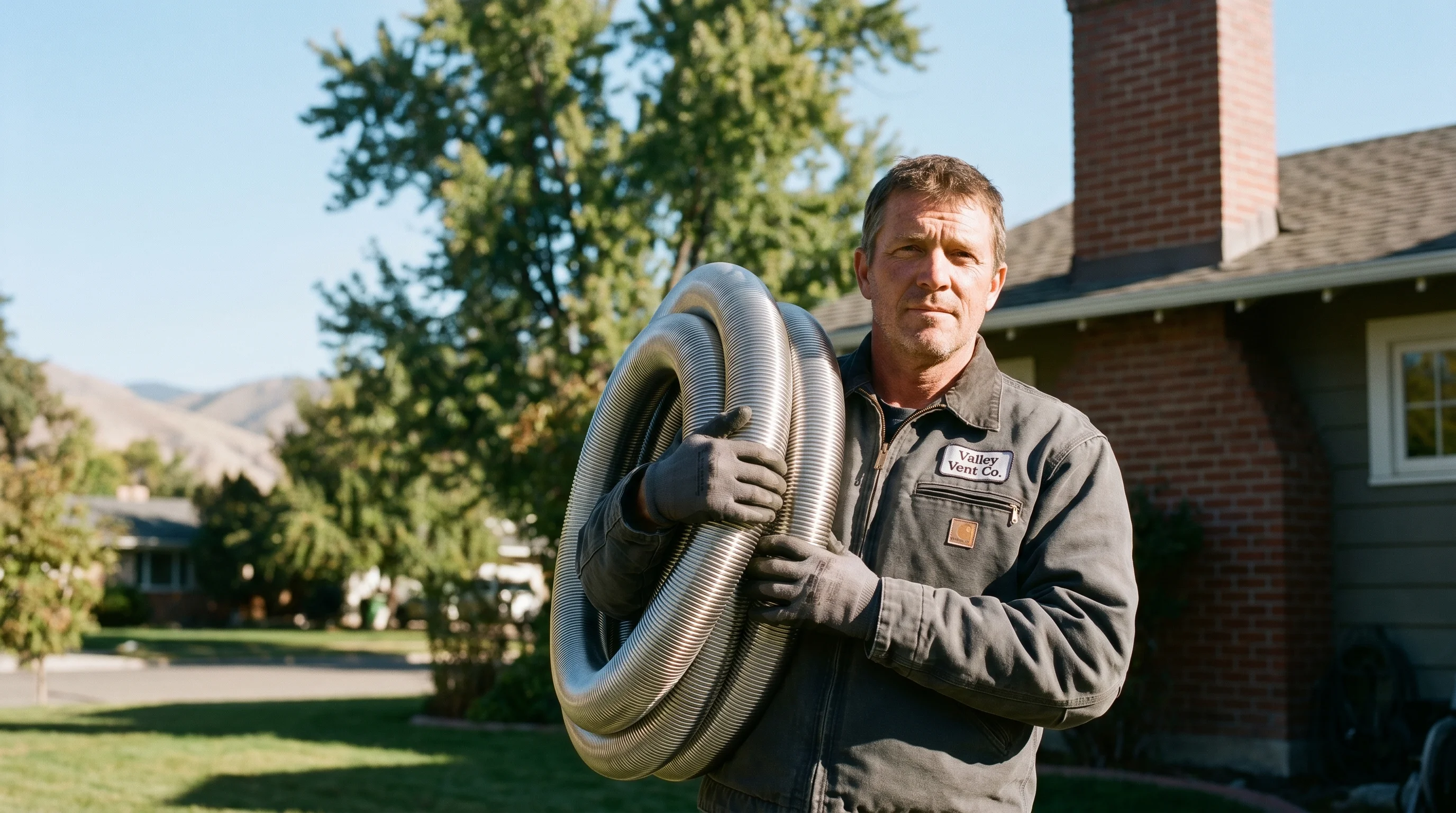
A flue liner cannot be correctly specified without knowing the chimney's actual internal geometry. Flue size, chimney height, number of offsets, and existing tile condition all affect liner selection. A company that quotes relining without a camera inspection is estimating blind. We do not do that.
Relining is also not always the right answer. Isolated cracked tiles with an otherwise sound liner and clean mortar joints can sometimes be addressed with a cast-in-place resurfacing system instead of a full insert liner. The camera tells us which approach is appropriate for your specific chimney.
How much does chimney flue relining cost in Boise?
Relining is priced by chimney height, flue size, the number of offsets, and the liner type. Taller chimneys and chimneys with more bends cost more, because more liner footage is required and the installation is more involved. We do not quote relining without a Level 2 inspection first: the camera is the only reliable way to confirm the existing flue geometry and to verify that a liner is even the correct repair.
What type of liner should I get for my chimney?
The liner type is determined by the appliance connected to the flue. Type-316 stainless steel is required for gas and oil appliances because those fuels produce acidic condensates that corrode Type-304 liners prematurely. Type-304 is acceptable for wood-burning applications. Flexible liner systems can navigate offsets and bends that rigid liner sections cannot. Rigid liner is appropriate for straight chimneys. We specify the correct liner for the appliance and fuel type - not the least expensive option that might work.
How do I know if my chimney needs repointing or tuckpointing?
Look for mortar joints that are cracked, crumbling, or recessed more than 1/4 inch below the face of the brick. If you can poke a screwdriver into the joint without force, the mortar has failed and water is getting in. Left alone, failed mortar lets moisture into the masonry, which causes freeze-thaw spalling and can eventually make the chimney structurally unsound.
What causes chimney crown damage?
Idaho's freeze-thaw cycles are the main culprit. Water gets into small cracks in the crown, freezes, expands, and widens the crack. A damaged crown lets water into the flue and can cause damage to the liner, smoke chamber, and surrounding masonry. A properly poured crown with an overhang and drip edge survives freeze-thaw cycles much better than a flat-poured crown.
Do I need a new liner or can the existing one be repaired?
Cracked clay tile liners can sometimes be repaired with a cast-in-place system that coats the interior. Severely spalled or missing tile sections typically require a stainless steel insert liner. A Level 2 camera inspection is the only reliable way to assess liner condition from the bottom to the top of the flue.
Serving the Treasure Valley
One local crew. Every town. From Boise to Middleton - we are your neighbors.
Takes about 60 seconds - we text back less than 1 hr
