Chimney Tuckpointing in Boise, Done Before Winter
Failed chimney mortar lets water into the masonry. Idaho freeze-thaw cycles do the rest - saturated brick spalls, joints open wider, and structural failure follows. Tuckpointing stops the cycle before it reaches the brick face.
10% off any chimney repair. Use code REPAIR10.
How Chimney Tuckpointing Works
-
Joint Condition Assessment
The technician examines each joint face on all four chimney elevations. Joints that are cracked, crumbling, recessed more than 1/4 inch below the brick face, or that admit a screwdriver tip without resistance have failed. The assessment maps how many courses and which elevations need repointing and determines whether the brick face has already begun to spall from water penetration. Written scope and price are provided before work begins.
-
Mortar Joint Raking and Cleaning
Failed mortar is removed to a minimum depth of 3/4 inch using an angle grinder or oscillating saw. Surface-applied mortar that has not been properly keyed into the joint is not a repair - it cracks off within one or two freeze-thaw cycles. Raking to proper depth is what allows the new mortar to bond mechanically. All loose material and dust are removed from the joint cavity before any new mortar is applied.
-
Mortar Application and Tooling
Type S mortar - rated for exterior and below-grade masonry work with the freeze-thaw resistance Idaho's climate requires - is packed into the raked joints in layers when depth exceeds 3/4 inch. Each layer is allowed to achieve initial set before the next is applied. The joint is tooled to match the original profile when the mortar reaches the right stiffness. Tooling compresses the mortar face and improves weather resistance. Joints are misted during cure in hot weather to prevent too-rapid drying.
Level 2 Chimney Inspection
Camera inspection of the full flue plus exterior assessment. Documents mortar joint condition, liner condition, and crown status. Written report before any repair authorization.
Why Mortar Selection Matters in the Treasure Valley
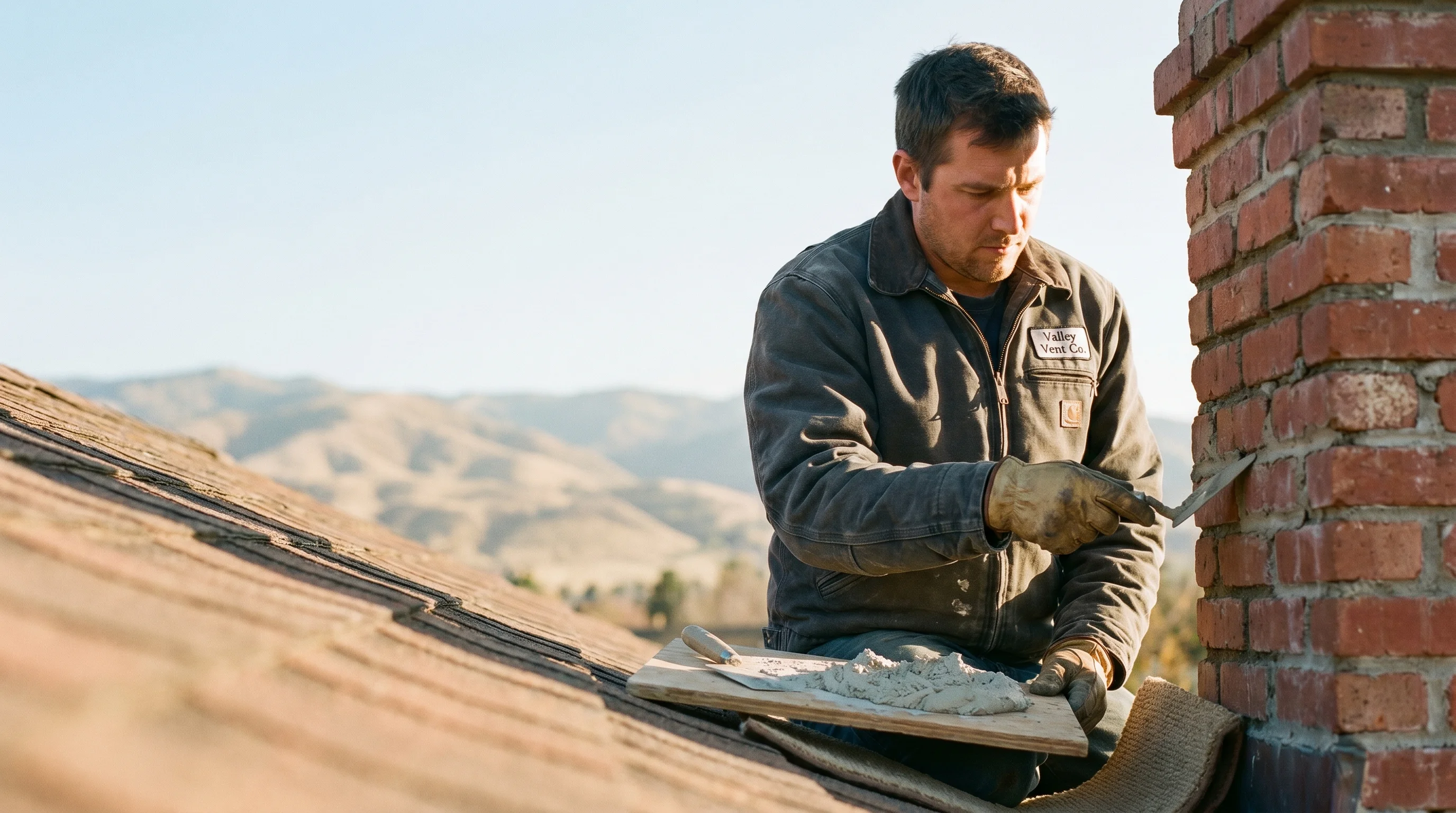
Not all repointing mortar is the same. Type N mortar is softer and more flexible, appropriate for interior work and some historic preservation applications. Type S mortar is the correct choice for exterior chimney work in Idaho: it has higher compressive strength and better freeze-thaw resistance. Using the wrong mortar type creates a joint that is harder than the surrounding brick - causing the brick face to spall instead of the mortar joint failing cleanly as intended.
How much does chimney tuckpointing cost in Boise?
Tuckpointing is priced by the scope of mortar failure. A chimney with isolated joint failure on one elevation is a much smaller job than one with failed mortar on all four sides and at the crown. We do not quote tuckpointing over the phone, because the scope varies too much for a phone number to be honest. A Level 2 inspection documents the actual extent before we price the repair.
What is the difference between tuckpointing and repointing?
In standard trade usage, both terms describe the same process: removing deteriorated mortar from joints to a minimum depth and packing in fresh mortar. Some older references use tuckpointing to describe a specific two-color mortar technique used in decorative brickwork, but in the chimney trade the terms are interchangeable. What matters is the process: joints must be raked or cut to at least 3/4 inch depth to get a mechanical key for the new mortar. Cosmetic surface application of mortar over failing joints is not repointing - it fails within one or two freeze-thaw cycles.
How do I know if my chimney needs repointing or tuckpointing?
Look for mortar joints that are cracked, crumbling, or recessed more than 1/4 inch below the face of the brick. If you can poke a screwdriver into the joint without force, the mortar has failed and water is getting in. Left alone, failed mortar lets moisture into the masonry, which causes freeze-thaw spalling and can eventually make the chimney structurally unsound.
What causes chimney crown damage?
Idaho's freeze-thaw cycles are the main culprit. Water gets into small cracks in the crown, freezes, expands, and widens the crack. A damaged crown lets water into the flue and can cause damage to the liner, smoke chamber, and surrounding masonry. A properly poured crown with an overhang and drip edge survives freeze-thaw cycles much better than a flat-poured crown.
Do I need a new liner or can the existing one be repaired?
Cracked clay tile liners can sometimes be repaired with a cast-in-place system that coats the interior. Severely spalled or missing tile sections typically require a stainless steel insert liner. A Level 2 camera inspection is the only reliable way to assess liner condition from the bottom to the top of the flue.
Serving the Treasure Valley
One local crew. Every town. From Boise to Middleton - we are your neighbors.
Takes about 60 seconds - we text back less than 1 hr
