Chimney Animal Removal Across the Treasure Valley
Humane animal removal from chimneys, a post-removal sweep to clear nesting debris and waste, and stainless steel cap installation so the chimney stays clear going forward.
20% off the post-removal sweep. Use code SWEEP20.
The Three-Step Process for a Cleared Chimney
-
Assessment and Humane Removal
The technician determines what species is present and where in the flue the animal is located. For animals above the damper, access is from the roof. For animals that have fallen below the damper into the firebox, access is through the front. Removal is performed without harming the animal wherever possible. Nesting material is bagged and removed. Chimney swifts - a protected species - cannot be disturbed during nesting season. We will tell you when the chimney needs to stay closed and for how long.
-
Post-Removal Chimney Sweep
After the animal and nesting material are removed, the flue is swept from top to bottom. Bird nests in a chimney flue are a fire hazard - they accumulate dry organic material that ignites readily. The sweep also removes debris, droppings, and any material the animal brought in. A Level 1 inspection is performed to confirm the liner is undamaged before the chimney is returned to use.
-
Stainless Steel Cap Installation
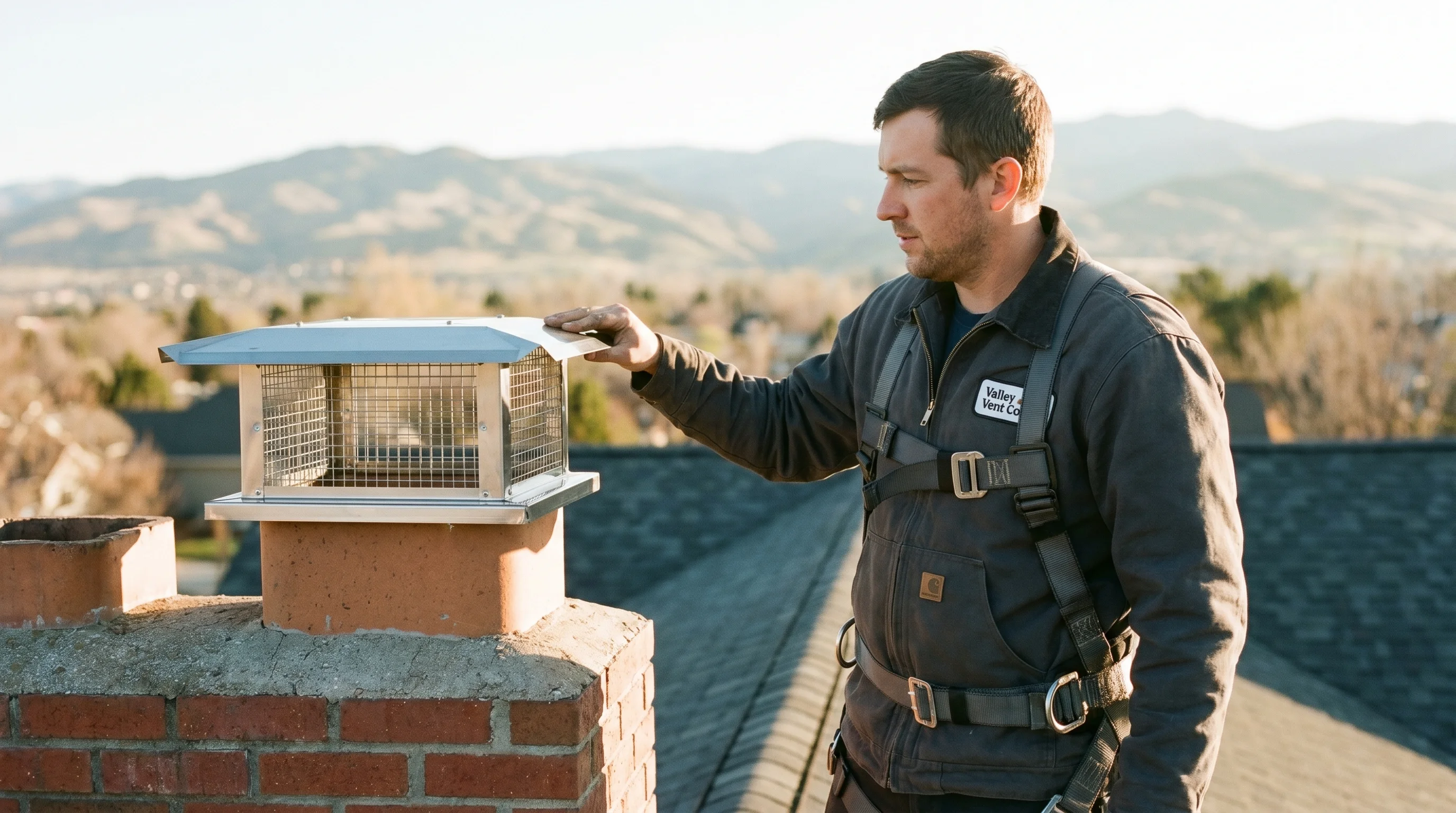
A stainless steel chimney cap with mesh sides is sized and installed on the flue to cover the opening. The mesh blocks birds and animals while allowing combustion gases and smoke to exit. The cap also deflects rain and prevents debris from entering the flue. An uncapped chimney in a Treasure Valley neighborhood near open land will see animal entry repeat without one.
Chimney Sweep + Level 1 Inspection
After animal removal, a full sweep removes nesting debris and waste from the flue. Level 1 inspection verifies the liner is clear and undamaged before the chimney is used again.
Handled Right the First Time
What should I do if there is an animal in my chimney?
Do not light a fire. Animals in a flue - birds, raccoons, squirrels, or bats - can block the flue entirely. Lighting a fire to drive the animal out typically results in an injured or dead animal lodged in the flue, smoke backed into the home, and a more difficult removal job. Call Valley Vent Co. and we will assess whether the animal is above or below the damper and handle removal before the chimney is used again.
What animals commonly get into chimneys in the Treasure Valley?
Chimney swifts nest in uncapped chimneys and are federally protected migratory birds - nests must not be disturbed during nesting season. Raccoons use uncapped chimneys as denning sites, particularly in spring when females are raising young. Starlings build large nests that can block the flue completely. Squirrels fall into open flues and often cannot get back out. Bats roost in chimneys during warm months. Each situation is handled differently.
Does a chimney cap really prevent animal entry?
Yes. A properly sized and installed stainless steel chimney cap with mesh sides covers the top of the flue opening and blocks all animal entry while still allowing combustion gases to escape. It also prevents rain, snow, and debris from entering the flue. An uncapped chimney is an open invitation for birds and animals, particularly in neighborhoods adjacent to open land - common throughout the Treasure Valley.
Is chimney swift removal legal?
No. Chimney swifts are a federally protected migratory bird species under the Migratory Bird Treaty Act. Their nests, eggs, and young cannot be disturbed, removed, or destroyed during the nesting season. If chimney swifts have nested in your chimney, the chimney must remain unused until the young have fledged and the family has departed - typically by late summer. After they leave, we remove the nest debris, sweep the flue, and cap the chimney to prevent future nesting.
Are you insured?
Valley Vent Co. is fully insured. We carry general liability and workers' compensation coverage. Our technicians are trained to CSIA standards. You can ask for a certificate of insurance before scheduling if you need documentation for a landlord, property manager, or insurance company.
Serving the Treasure Valley
One local crew. Every town. From Boise to Middleton - we are your neighbors.
Takes about 60 seconds - we text back less than 1 hr
